
Narrow front gardens and side-access courtyards need a different approach to a standard front yard — the key is building vertically, widening the path instead of the beds, and choosing a tight, repeated plant palette.
Small front garden landscaping ideas for narrow blocks focus on three things: give the path more room than the garden beds, use vertical elements like trellises and screens instead of wide plantings, and choose two or three plant varieties rather than many. This approach suits side-access courtyards and tight Hawkesbury and Hills District blocks particularly well, where a standard-width design simply doesn’t fit.
Why Narrow Front Gardens Need a Different Approach
A narrow front garden fails when it’s treated like a small version of a standard yard. Beds squeezed on either side of a thin path create an awkward, cramped feel. The fix isn’t more plants — it’s fewer, more deliberate choices. On tight blocks common across Kellyville, Castle Hill, and Rouse Hill, side access often eats into the available width even further. This makes every design decision matter more than it would on a wider frontage.

Widen the Path, Not the Garden Beds
A generous, well-paved path reads as more intentional than a narrow one squeezed between two garden beds. Rather than splitting limited width between path and planting, commit most of the space to the path and let the beds run thin along the edges. This works especially well on side-access blocks, where the path also needs to function as a genuine walkway, not just a decorative feature. A single strong material, rather than a mix of paving types, keeps a narrow space feeling calm rather than busy.
Choosing a Paving Material for a Narrow Path
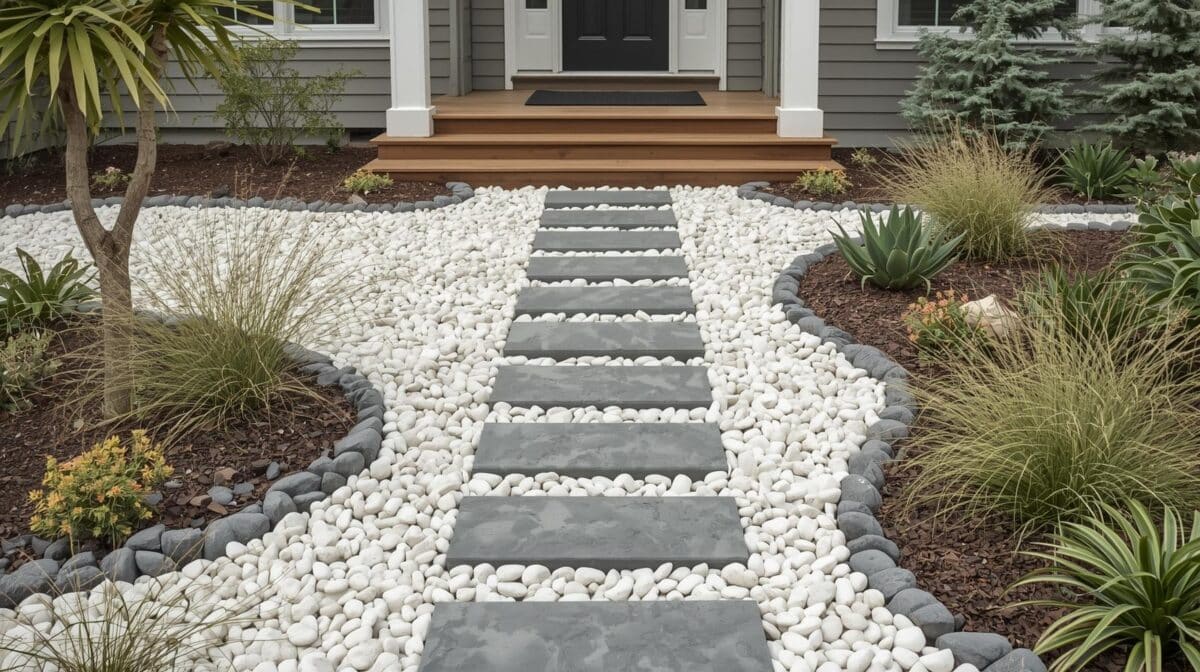
Pavers laid in a simple running pattern suit most narrow front gardens, since a busy laying pattern tends to make a tight path feel even smaller. Decomposed granite works well as a softer, more natural-looking alternative, particularly alongside native planting. Whichever material you choose, a paving sand base underneath keeps the surface stable and free-draining, which matters on the clay-heavy soils common across the Hawkesbury and Hills District. Avoid stepping-stone style paths on genuinely narrow blocks — the gaps between stones tend to collect mulch and debris, which shows up more obviously in a tight space than it would on a wider path.
Vertical Interest for Tight Side Access
Vertical elements do the heavy lifting in a narrow garden. A trellis or slim screen planted with star jasmine or a climbing native vine adds greenery without eating into ground-level space. This is one of the most effective tools for side-access courtyards, where fence lines or walls already exist and can be put to work. Height also draws the eye upward, which makes a tight space feel taller and less enclosed.

In our experience, the most common mistake on narrow blocks is planting a wide shrub at ground level instead of building vertically along a boundary. The shrub eventually overtakes the path, and the whole space feels tighter within a year or two. A slim trellis fixed to an existing fence solves this without requiring any additional footprint. For side-access gardens specifically, check your local council’s boundary fence height rules before adding a taller screen, since side courtyards often sit close to a neighbouring property line.
Edging and Materials That Make a Narrow Bed Look Bigger
Clean, consistent edging is what separates a considered narrow garden from a cluttered one. Our steel garden edge creates a crisp, straight line along a thin bed, which reads as far more deliberate than an unedged border. It also keeps mulch and soil contained, which matters more in a narrow space where any spillage onto the path is immediately obvious. Our full range of garden edging options covers both steel and paver-based edging, depending on the finish you’re after. A single consistent edge line, run the full length of the garden, makes a narrow bed look wider than it actually is.
Low-Maintenance Plant Choices for Narrow, Shaded Beds
Narrow side-access gardens are often partly shaded by a fence or the house itself. Compact native groundcovers and shade-tolerant Lomandra handle this well, and both suit the Hawkesbury and Hills District’s clay-heavy soils and hot, dry summers. Dwarf Westringia and compact Grevillea varieties also perform reliably in the narrow strip along a path, provided the bed gets at least a few hours of sun each day. Our guide to front yard plants for Australian conditions covers a wider range of suitable species if you need more options beyond these narrow-bed staples. As of 2026, Sydney Water’s WaterWise gardens guidance continues to recommend exactly this kind of drought-tolerant, low-water planting for front garden zones across greater Sydney.

Repeating just two or three plant types along the length of a narrow bed creates a calm, cohesive look. A wide mix of varieties, by contrast, tends to make an already tight space feel busier and smaller than it is. If part of the bed sits in deeper shade, consider a groundcover-only approach in that section rather than forcing a sun-loving shrub into a spot it won’t thrive in.
Pebbles, Mulch, and Finishing Touches for a Polished Look
A layer of decorative pebbles or quality mulch finishes off a narrow bed and keeps weeds down at the same time. Our decorative pebbles and gravels range includes lighter tones that brighten a shaded side courtyard, along with warmer tones that suit a more natural planting style. Mulch depth matters here too. A layer under 50mm allows weeds through within months, while 50–75mm gives lasting coverage. Whichever material you choose, keeping it consistent along the full bed length reinforces the clean, uncluttered look that makes a narrow garden feel considered rather than squeezed.
Ready to Start Your Front Garden Project?
Parklea Sand & Soil has supplied edging, pebbles, mulch, and garden soil to the Hawkesbury and Hills District since 1988. Whether you’re working with a standard front yard or a genuinely narrow, side-access block, our team can help you choose materials that suit the space and the soil. Visit our yard at 729 George Street, South Windsor, or call us on (02) 4572 7549. We deliver in bulk across Blacktown, Riverstone, Rouse Hill, Castle Hill, and surrounding suburbs — just ask for a quote. We’re open Monday to Friday 7am–5pm and Saturday 7am–1pm, with pickup and bulk haulage delivery both available.
FREQUENTLY ASKED QUESTIONS
How do I make a small front garden look bigger?
Widen the path rather than the garden beds, use vertical elements like trellises instead of ground-level shrubs, and limit planting to two or three repeated species. This combination makes a narrow space feel deliberate rather than cramped.
What plants suit a shaded side courtyard garden?
Lomandra, dwarf Westringia, and compact Grevillea groundcovers all tolerate partial shade and the clay-heavy soils common across the Hawkesbury and Hills District. Choose a few species and repeat them for a cohesive look.
What’s the best edging for a narrow garden bed?
A: Steel garden edging creates the cleanest, most consistent line along a thin bed. It also contains mulch and soil, which matters in a narrow space where spillage onto the path is immediately noticeable.
Do side-access front gardens need special planning?
Yes. Side-access gardens often border a neighbouring property, so check local council boundary fence height rules before adding screens or trellises. The path also needs to function as a genuine walkway, not just a decorative feature.
How deep should mulch be in a small front garden?
Aim for 50–75mm. Anything shallower allows weeds through within months, while a consistent depth across the full bed reinforces the clean look that makes a narrow garden feel considered.